A 14-day sailing cruise through the delights of Western Kvarner and Zadar
The coasts between Zadar and the western Kvarner are a part of Croatia long beloved by sailors, thanks to their wealth of scenic and cultural treasures. The tradition of welcoming tourists in these areas dates back as far as the 19th century. The grand palaces of the past are among the region’s wonders, although it is generally the natural attractions that draw most visitors here.
Crystal-clear waters inhabited by dolphins, wild areas where griffon vultures soar, enchanting beaches, and some of Croatia’s most beautiful islands await you in the Kvarner: Krk, Cres, Unije, Dugi Otok, to name just a few. So, are you ready to cast off?
Day 1, Unije – Boarding
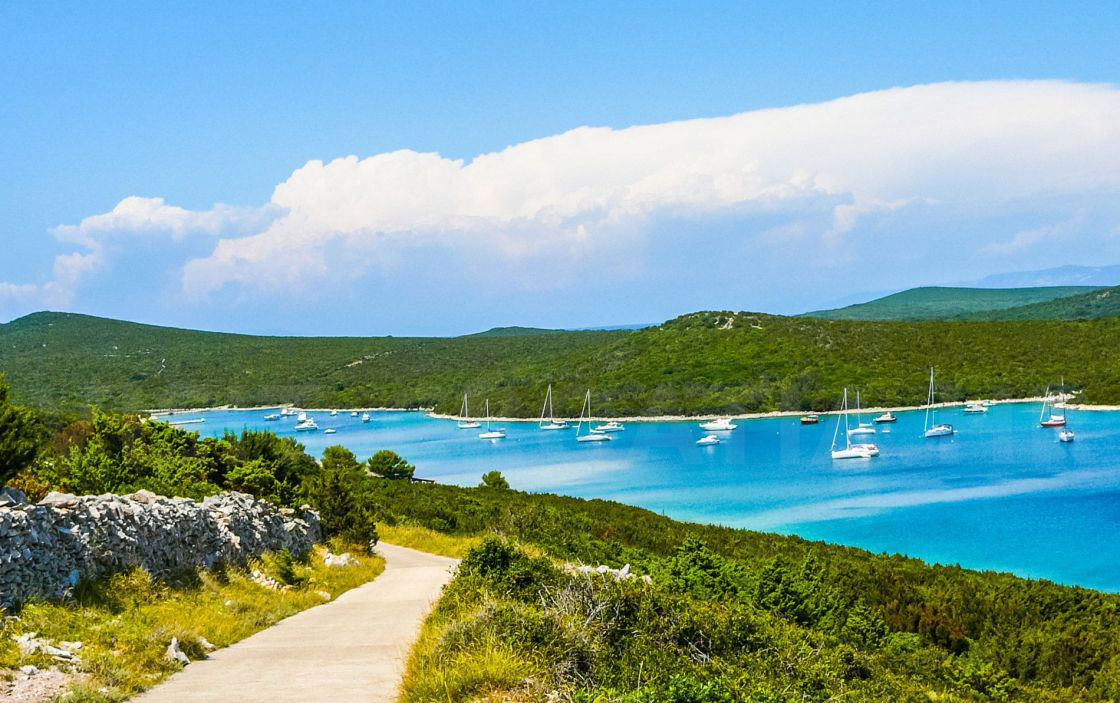
Our base for the cruise between Zadar and the Kvarner is the island of Unije, part of the Cres and Lošinj archipelago. Mooring can be done at Unije Maracol anchorage. Unije has been inhabited throughout history due to its fortunate geographic position at the entrance of the Kvarner, its numerous freshwater springs, and its fertile land. Both the northern and eastern sides of the island are steep and rocky, covered with evergreen holm oaks, while the southern and western sides are flatter, forming a bay where the facades of the houses reflect in the sea.
At the foot of Mount Kriz on the western part of the island lies the only town, surrounded by olive groves, with characteristic houses arranged in an amphitheater around the port. Worth visiting is the Vnetak Lighthouse, located on the southwestern tip of the island. Built in 1873, it consists of a circular stone tower atop a building that serves as its base, along with two warehouses and a machine room. Also of interest are the Malanderski citadel in the northeastern part of the island and the Kastel citadel in the central part. There are no cars on the island, but it is easy to find restaurants, pastry shops, bakeries, a post office, and grocery stores in the various villages.
Day 2, Unije – Mali Lošinj, 7 miles
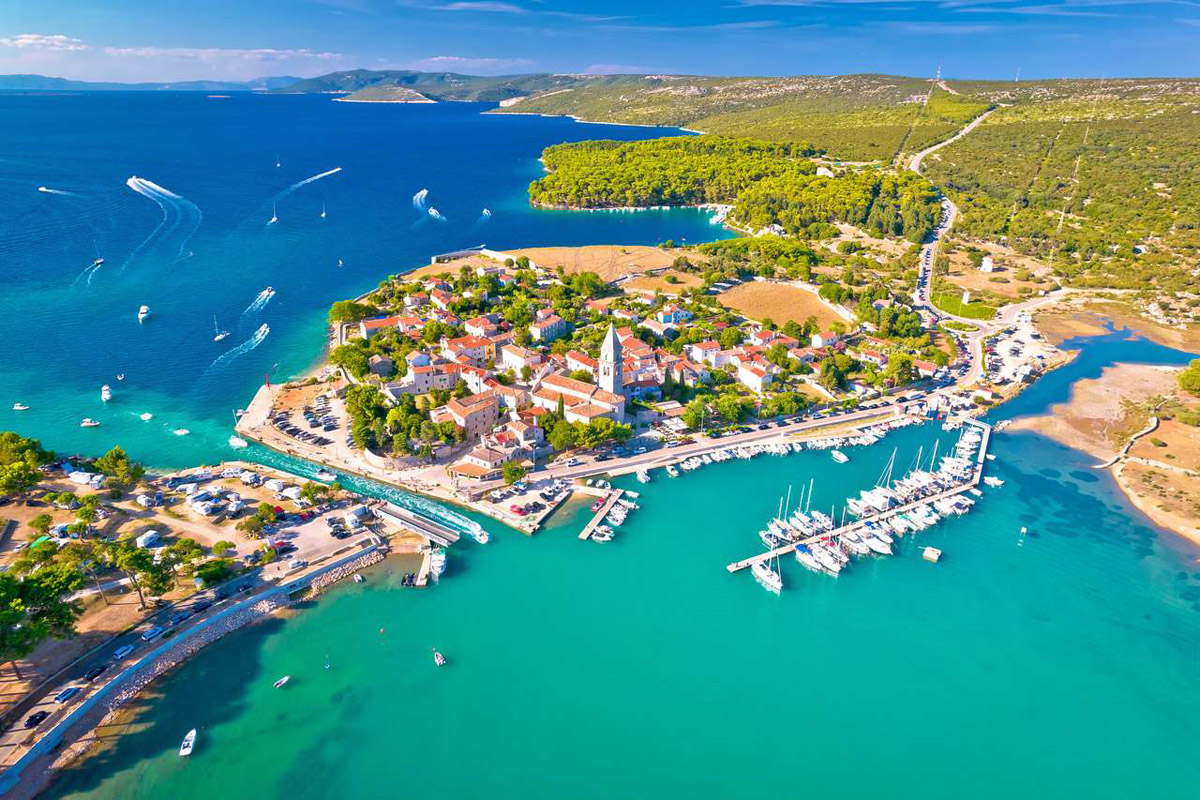
The next destination is Mali Lošinj, also known as Lussinpiccolo. It is the most charming port of Lošinj and the largest settlement on the island, located on the southern side of Lošinj Bay. Its strategic position has historically made it an important maritime and commercial hub, and it remains a highly popular tourist destination for sailors, thanks to its climate, cuisine, and welcoming spas—a tradition dating back to the Habsburg thermal baths. The maritime and naval heritage of this town is significant; by the mid-19th century, it boasted 150 sailing ships and four shipyards. Its naval history is closely linked to Admiral Agostino Straulino (1914–2004), Italy’s greatest sailor of all time, who was born here.
Among the attractions to visit in Lussinpiccolo is the magnificent bronze statue of the athlete Apoxymenos (2nd–1st century BC), nearly 2 meters tall, discovered by a diver in 1996 and displayed in a museum entirely dedicated to it.
Day 3, Mali Lošinj – Premuda, 16 nm
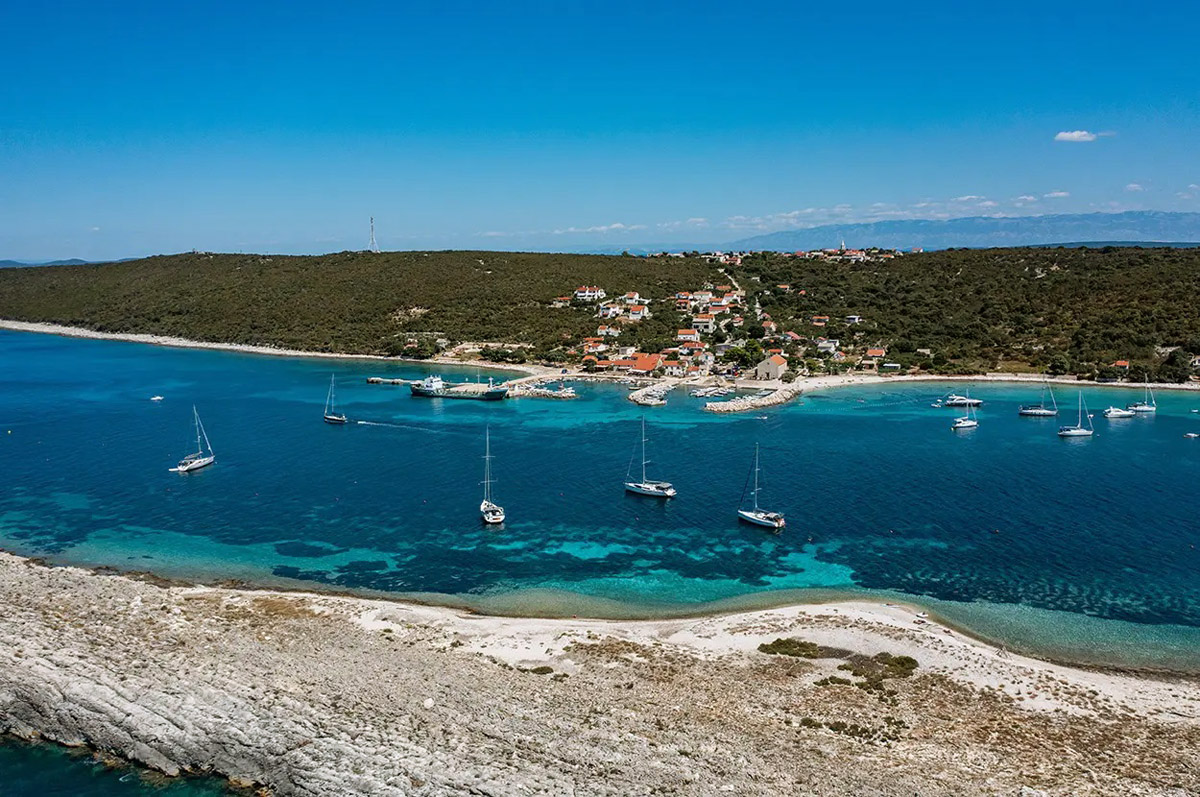
We set sail for Premuda, a small island belonging to a northern Dalmatian archipelago northwest of Zadar. Located southwest of Silba and northwest of Škarda, Premuda is about 10 km long, up to 1 km wide, with a total area of 9.2 km². The island’s main village has around 50 inhabitants, though the population rises significantly in summer. Locals mainly cultivate olives and raise sheep, but tourism has become increasingly important in recent years.
The eastern coast is exposed to the Bora wind, so it’s safer to moor in the charming small port of Krijal on the western side. Next to the harbor, you’ll find a small church, a cemetery, and rainwater wells considered more precious than wine. Premuda is particularly popular among diving enthusiasts. The “Katedrala” is a network of connected caves where sunlight streams through porous ceilings, creating stunning effects. Another famous dive site is the wreck of the Austro-Hungarian battleship SMS Szent István from World War I, lying between 40 and 60 meters deep, accessible only to experienced divers.
Day 4, Premuda – Dugi Otok, 17 nm
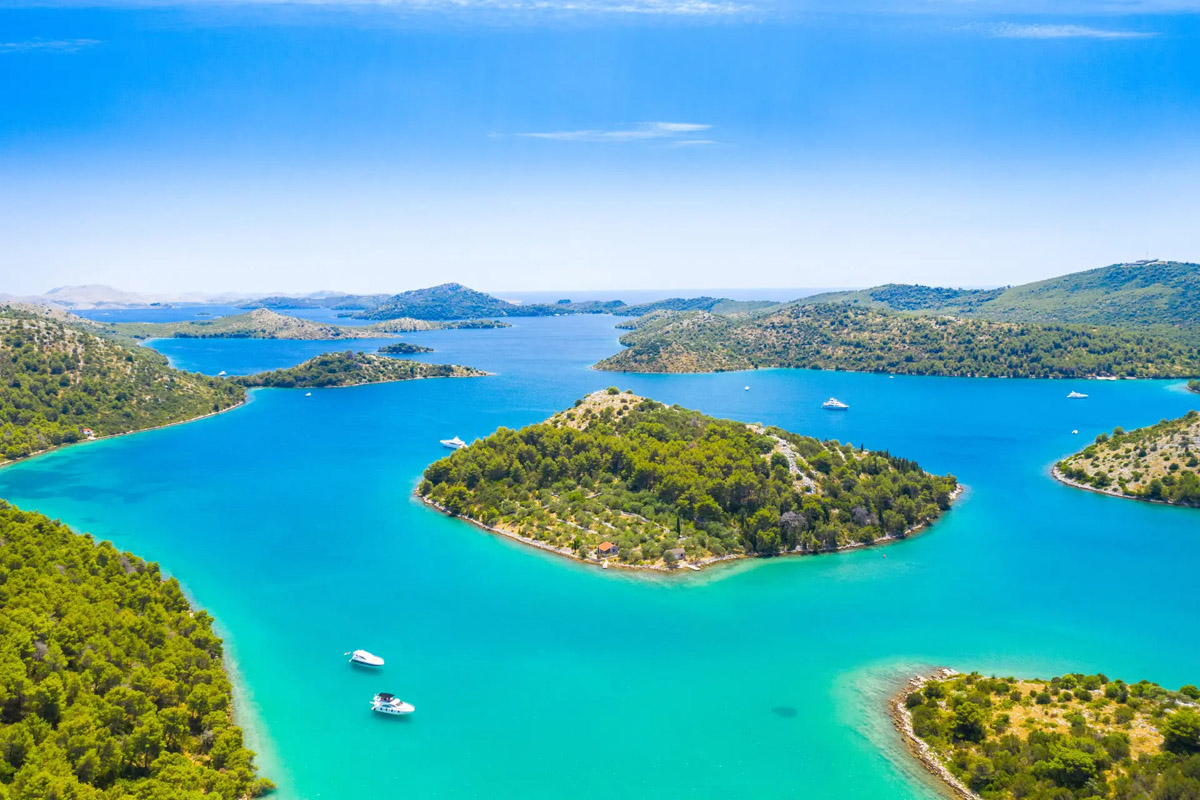
We head to Dugi Otok, the largest island in the Zadar archipelago. It remains one of the few places where peace and tranquility can be enjoyed even in high season, making it ideal for sailors who appreciate natural beauty and quiet coves. The island’s beaches vary by area: near Sali, the largest village, you’ll find rocky beaches with stone terraces, cliffs, and pinewoods—perfect for sailing, diving, and naturism.
On the northern part of the island, there are also sandy beaches accessible only by boat. Among these, Saharun stands out, located on Dugi Otok’s northwest coast near Soline, Bozava, and Veli Rat. The beach features white sand and turquoise waters, bordered by pine forests, with shallow water extending up to 200 meters from the shore. Nearby, at Veli Rat, the 41-meter-high lighthouse is a notable landmark.
Day 5, Dugi Otok – Sestrunj, 5 nm
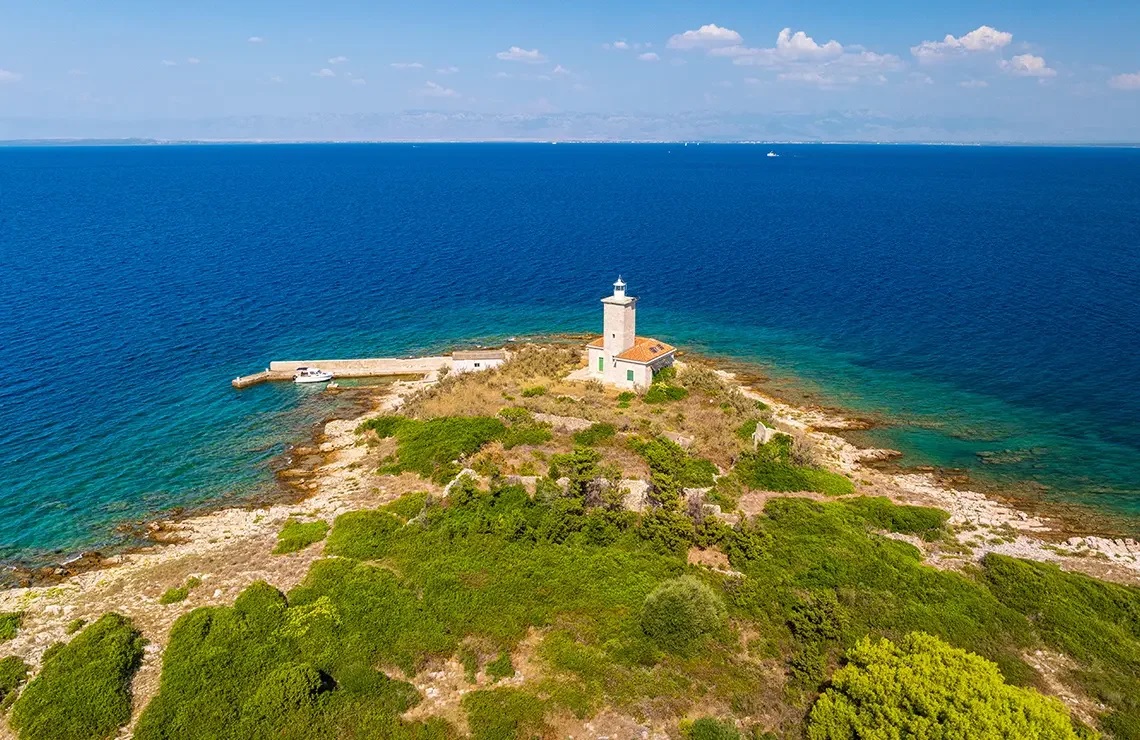
Next, we sail to Sestrunj, a smaller island in the central Zadar archipelago. Covered with low Mediterranean vegetation and shrubs, Sestrunj is especially attractive to sailors thanks to its strategic position along a natural sailing route from Zadar to the western islands. Its elevated terrain offers exceptional views of much of the archipelago and Zadar’s coastline.
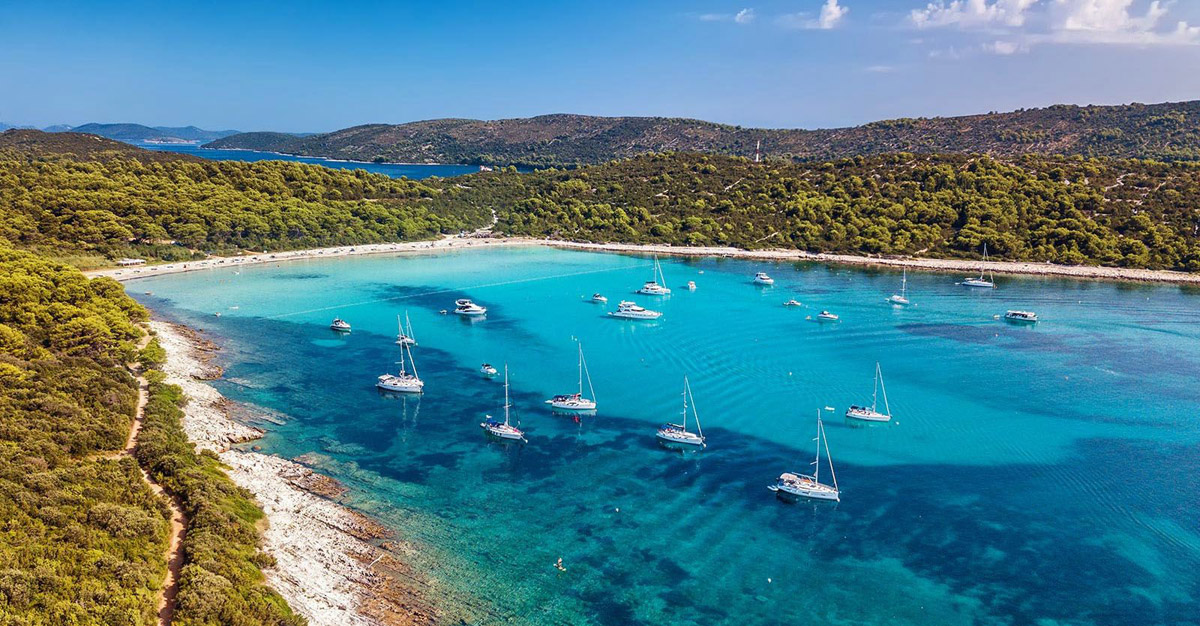
Day 6, Sestrunj – Sali (Dugi Otok), 13 nm
Returning to Dugi Otok, we explore Sali, a village with a millennia-old fishing tradition and ancient olive groves that bear witness to centuries of agricultural activity. The most famous cultural event is the annual “Saljske užance” in August, featuring a donkey race as the main attraction. Sali also has numerous restaurants, an internet café, and grocery shops. In the off-season, it is a safe harbor for large fishing vessels waiting for better weather. Fresh fish can be purchased almost daily along the waterfront.
Sali’s cultural heritage includes sacred buildings such as the parish church of the Assumption of the Blessed Virgin Mary, with a magnificent 17th-century wooden altar and Glagolitic inscriptions, along with the churches of St. Roch and St. Nicholas. Traces of other Christian churches can also be found in the surrounding fields.
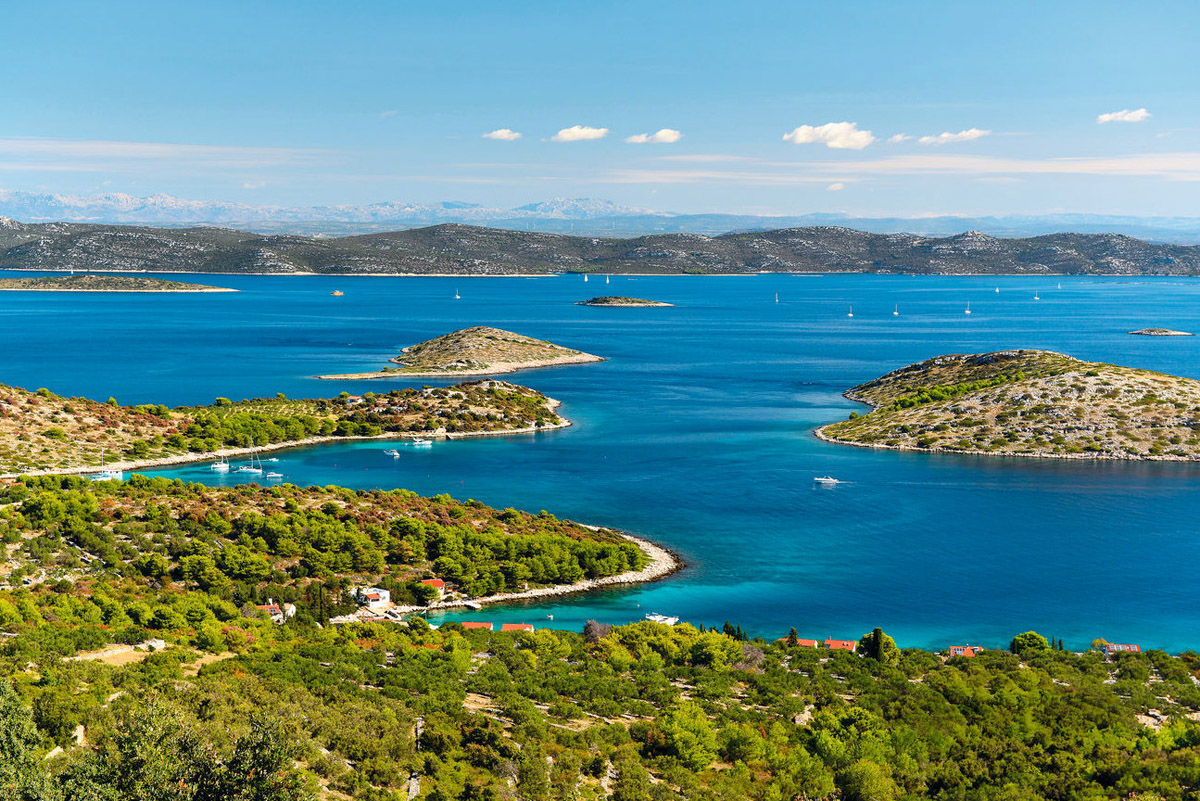
Day 7, Sali (Dugi Otok) – Žut, 12 nm
We continue sailing towards Žut, one of the islands in the Kornati archipelago. It lies between the island of Pašman, connected to the mainland by a ferry to Ugljan, and Kornat. Covering nearly 15 km² but only 2 km wide, Žut’s highest point reaches 172 meters. Its steep, rugged coastline features numerous bays—Hiljača, Sarušćica, Bizikovica, Golubovac, Žešnja, Podražanj, Strunac, and others—offering a “Robinson Crusoe” atmosphere and safe anchorages for sailing boats.
The island, covered with olive trees, figs, and vineyards, has no permanent settlements. However, throughout the year, various fishermen, shepherds, olive growers, and fig collectors from nearby Murter occasionally stay here. As a sailing paradise, Žut also has a marina with around 120 berths.
Day 8, Žut – Zadar, 18 nm
Time to weigh anchor once again and head for Zadar, often called the “Dubrovnik of the North” thanks to its beautiful beaches, colorful sunrises, rich history, and vibrant atmosphere. With a history spanning 3,000 years and a remarkable cultural heritage, Zadar always offers something new and original for visiting sailors.
Zadar also boasts a very unique landscape: parts of the city’s stone steps are submerged in water, with built-in pipes that play musical notes as waves fill them, creating a harmonious melody. This installation is known as the “Sea Organ” and the “Greeting to the Sun.” The surrounding hinterland is equally inviting, with three nearby national parks: Paklenica, Plitvice Lakes, and Krka.
Day 9, Zadar – Ist, 19 nm
Next, we sail to Ist, the only butterfly-shaped island among Croatia’s thousand-plus islands. This hidden Adriatic gem is a fantastic destination for sailors, nature lovers, and anyone seeking a peaceful Mediterranean escape. Ist is also the name of the island’s only village. The warm hospitality of its nearly 200 inhabitants will win you over instantly. Beach lovers will be enchanted by the small coves, while the surrounding islets and rocks make it ideal for diving enthusiasts.
A must-do is the climb to Straža, offering breathtaking panoramic views of Dugi Otok, the Kornati, Olib, Silba, and the open sea. If you dream of a car-free island vacation where you can hear the silence and drift to the rhythm of the waves, Ist will be your little corner of paradise.
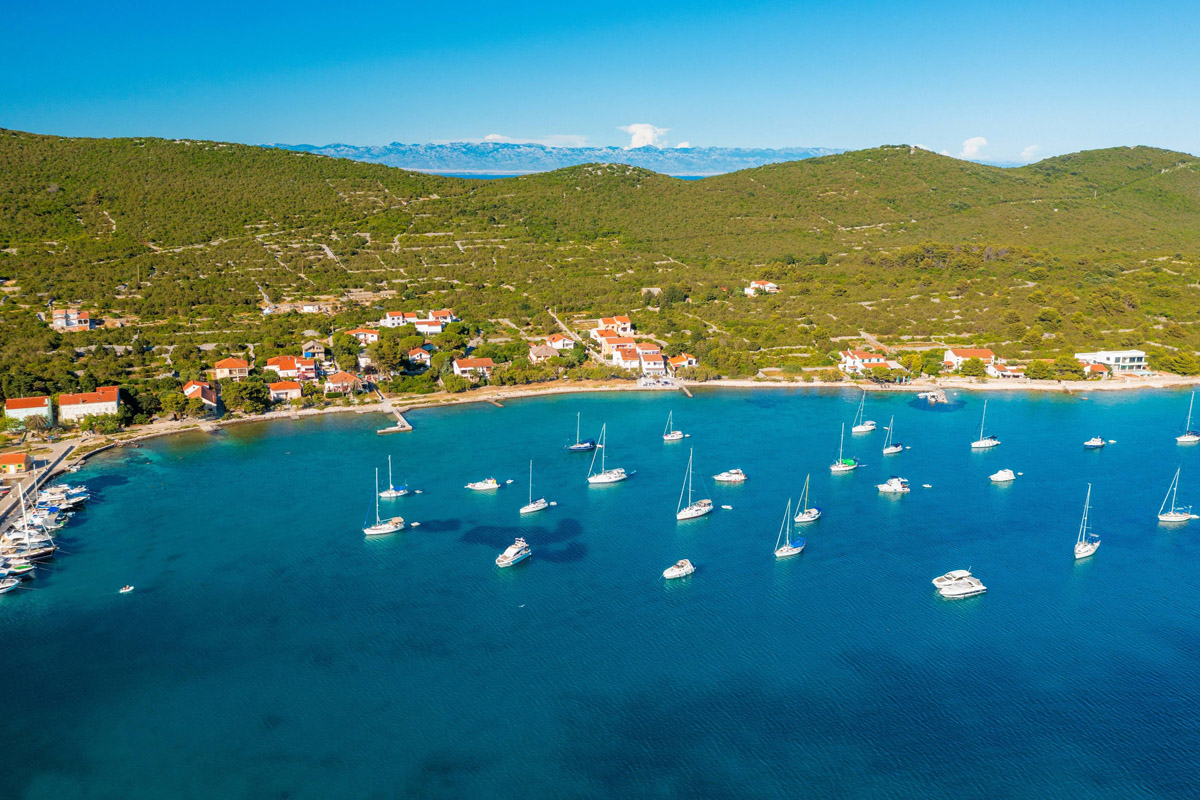
Day 10, Ist – Slatinica (Olib), 6 nm
Continuing northwest from Zadar, we arrive at Olib, situated southwest of Pag, southeast of Lošinj, and just east of Silba. This is a very quiet place where life flows slowly. The old buildings and the locals—many of whom emigrated to the U.S. in the 1950s and 60s—are fascinating. Today, many are returning with their children, often speaking perfect English. Due to the lack of freshwater sources, Olib never experienced major economic development, so there are no cars or industrial installations. Tourism is minimal, mostly consisting of passing sailors. Essential services are available, including a supermarket, restaurants, and a post office. Archaeological remains are scattered across the island, including the ruins of a Roman settlement, a church, and a monastery.
The southern part of Olib is home to the famous white sand beach of Slatinica, a beautiful bay offering mooring buoys from June to the end of September. The bay provides good shelter from summer storms but is unsafe during strong Sirocco or Bora winds. Anchoring about 100 meters from the shore is recommended, as the shallow seabed extends far from the coast. A forest path leads from Slatinica beach to the village of Olib, about a 20-minute walk.
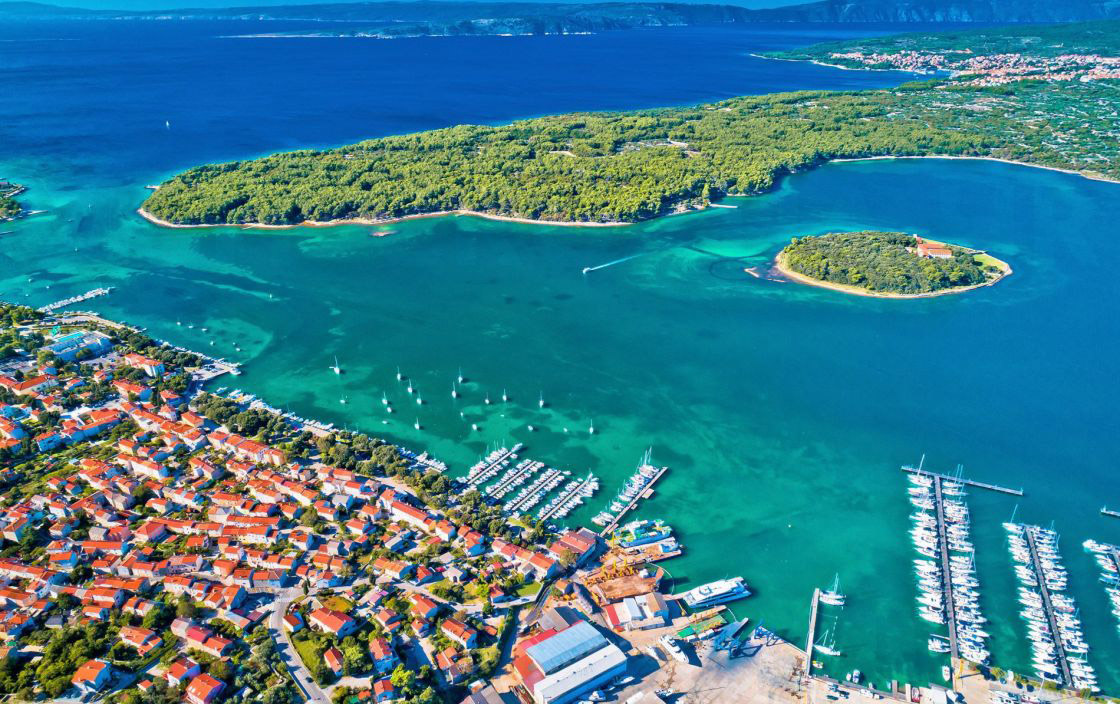
Day 12, Olib – Punat (Krk), 30 nm
Sailing through Zadar and the Western Kvarner. Punat, located on the eastern coast of the eponymous bay, is one of Croatia’s main nautical centers and the oldest and largest port in the Adriatic. Its narrow streets and old stone houses create an incredible environment for sailors. Main attractions, as well as numerous seafood restaurants, cafés, and wine bars, are just a short walk from the marina. Beaches stretch north along the city’s coastline toward the Krk Gulf. A must-see is Krk Castle, even just from its outer walls. Punat also has a small electric train that allows visitors to explore the coast quickly, and a water park in the town center.
Before departure, enjoy a pleasant walk on Kosljun Island, located a few hundred meters from Punat in the middle of the bay. The island’s lush vegetation hides a monastery and a church.
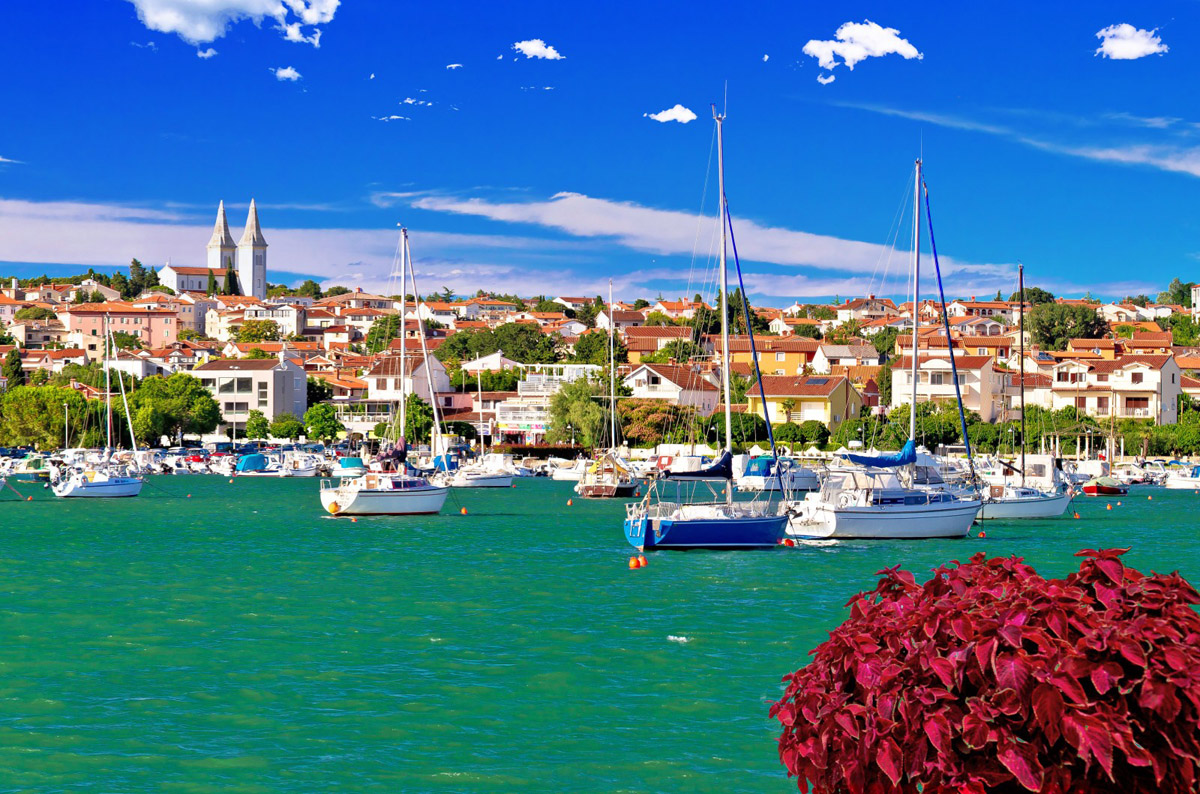
Day 13, Punat (Krk) – Cres, 26 nm
The town of Cres lies in the northeastern part of a large, well-protected bay, with ample and attractive swimming areas. Cres’ narrow streets are perfect for strolling and are mostly traffic-free. The town has shops selling local wine and olive oil, for which it is renowned. Cres has a lively center with a variety of local crafts available in shops and along the streets. Several outdoor restaurants allow visitors to enjoy delicious local cuisine while watching boats enter and leave the bay.
The marina on the outskirts of Cres recently received the Blue Flag, a prestigious recognition awarded to select beaches and marinas for excellence.
Cres also offers a long and varied coastline, with numerous charming coves on one side and stunning cliffs plunging into the sea on the other. Among them, Saint Ivan Beach is the most beautiful on the island. Don’t miss the Blue Cave, with its deep blue lagoon, or Mali Bok Beach in Orlec, a pebble beach sheltered by high cliffs providing perfect shade on hot summer days.
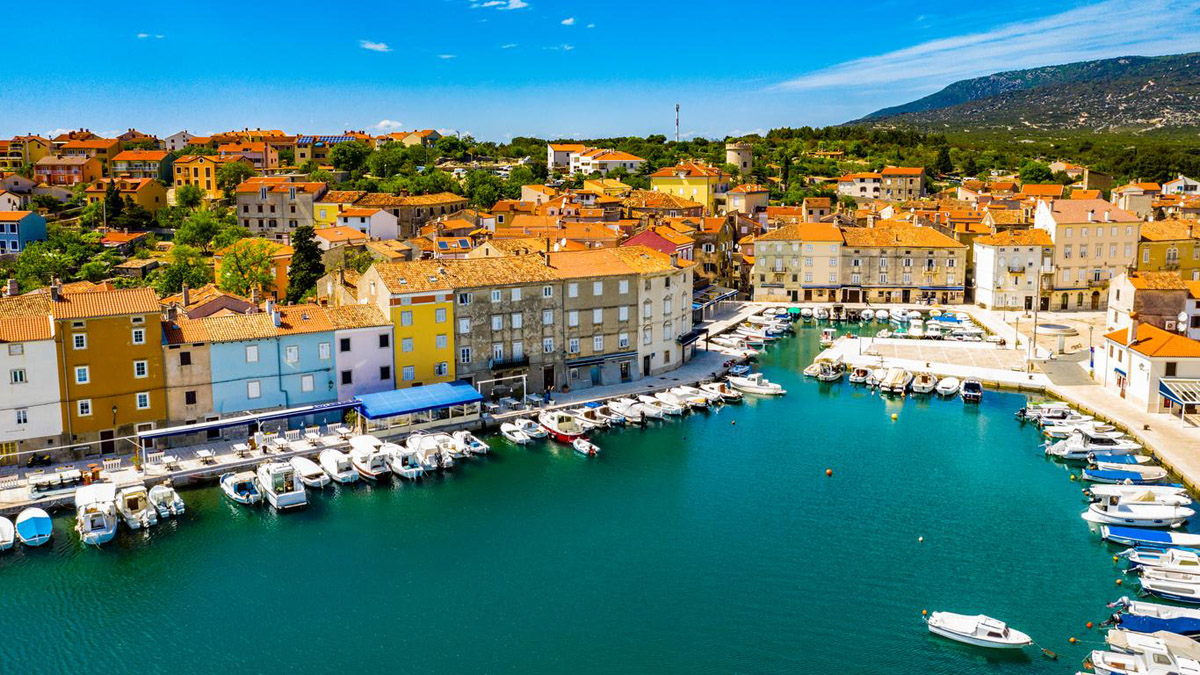
Day 14, Cres – Cape Kamenjak – Medulin, 30 nm
Almost at the end of our sailing adventure through Zadar and the Western Kvarner, but still one more destination awaits: the famous Cape Kamenjak, the southernmost tip of the Istrian Peninsula, near Medulin and the villages of Banjole and Premantura. The entire area has been declared a nature park and enjoys special protection. The coastline of the cape stretches approximately 15 nautical miles, dotted with numerous coves, small beaches, and islets. Gravel roads and trails lead to hidden spots along the peninsula. Kamenjak is particularly attractive for diving enthusiasts thanks to its fascinating underwater world.
Our disembarkation point for this Zadar and Western Kvarner cruise is Medulin, at the well-equipped and welcoming ACI Marina Pomer, located in a sheltered cove within the wide Medulin Gulf.

You May Also Like
Sailing among the Aegadian Islands, San Vito and the Zingaro Reserve
Organisation on the boat – a place for everything and everything in its place