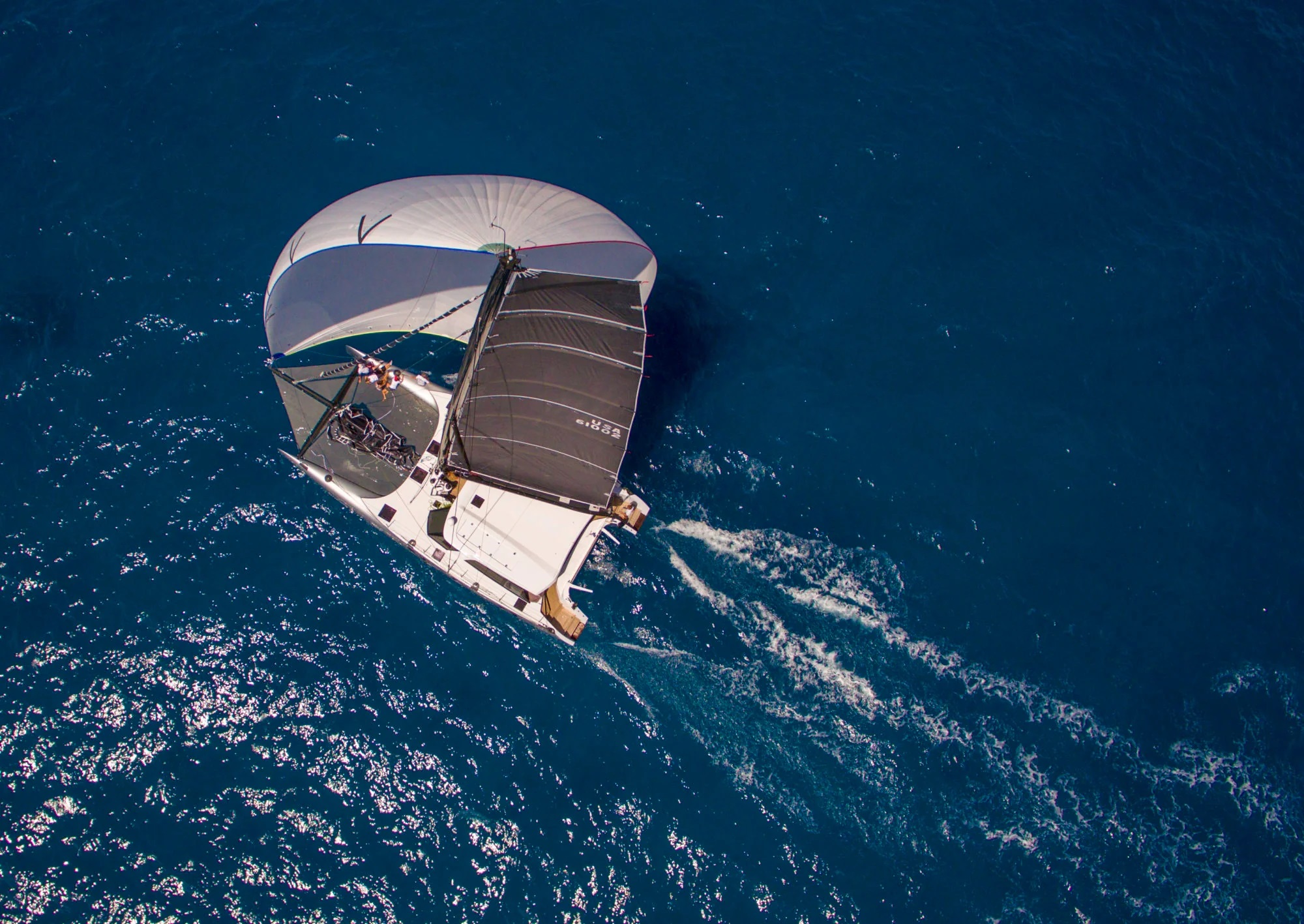
Apparent wind: How to make the most of it on a sailing cruise
Novice sailors setting out on a cruise quickly learn to appreciate the differences of apparent wind depending on the point of sail. We’ve all experienced sailing close-hauled in 25 knots of wind, fully dressed in foul weather gear with spray flying across the deck, only to see a boat sailing in the opposite direction, downwind, with its crew lounging in shorts and t-shirts, enjoying what seemed like a gentle 10-knot breeze.
However, apparent wind can change even during a single passage, and understanding these changes—and how to respond—can improve not only the speed but also the handling efficiency, comfort, and safety of a sailing cruise.
Discover the best boat rental deals
Read also: Managing wind gusts: Tips for safe sailing
True wind vs. apparent wind
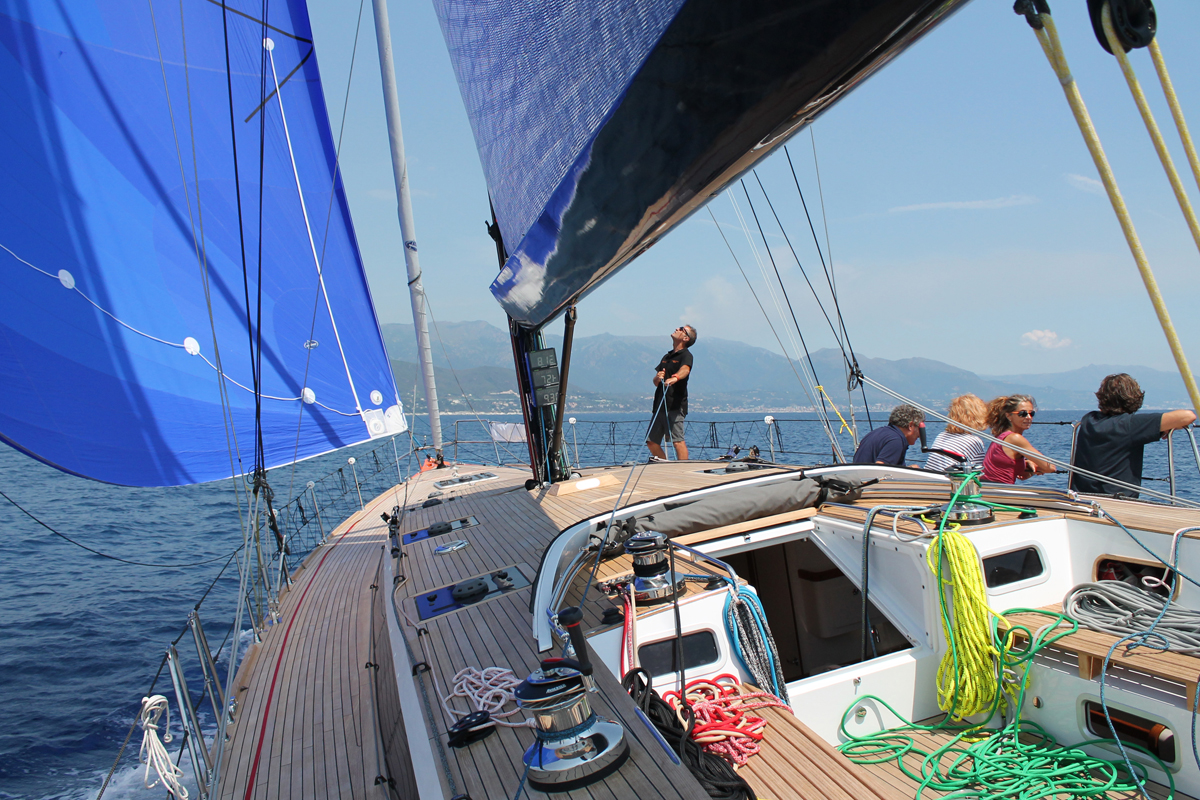
Wind is the very foundation of sailing. Without it, you go nowhere. It’s essential to feel the wind and know how to determine its direction, speed, and shifts in order to adjust the sail trim. But to do this, we first need to understand that there are two types of wind: true wind and apparent wind. The wind you feel on the sails or on your face is not the same as the wind ruffling the water or fluttering a flag on land.
The wind experienced on the boat is called apparent wind, while the wind felt on land is true wind. True wind is the meteorological wind, the wind blowing over the terrain. At sea, you observe it when the boat is stationary. Here’s a simple example to understand the difference:
When riding a bicycle, the wind you feel on your face is apparent wind. Similarly, when you stick your hand out of a car window, you’re feeling apparent wind again. On a boat, it’s the wind you feel as you move through the water. As the boat moves forward, it generates its own wind—just like on a bike or in a car. Ultimately, apparent wind is the sum of the wind generated by your own speed and the true wind blowing across the water.
Speed and angle of the apparent wind
Why does apparent wind change? Let’s look at the causes of these changes and how to react to them. If the true wind speed suddenly increases in the form of a gust, not only does the speed of the apparent wind increase, but the angle of the apparent wind also changes, shifting further aft along the yacht. Conversely, if the true wind speed decreases, the apparent wind speed also decreases and shifts more forward relative to the boat.
Changes in apparent wind also occur due to variations in the boat’s speed. If the boat slows down, the apparent wind decreases and shifts aft. If the yacht speeds up, the apparent wind speed increases and its angle shifts forward. In practice, any variation in the speed and angle of the apparent wind is usually a combination of both these factors.
So how should one react to these changes in apparent wind speed and direction? The answer varies depending on the yacht, the crew, the conditions, and whether a “racer” or “cruiser” approach is preferred.
Apparent wind: managing gusts
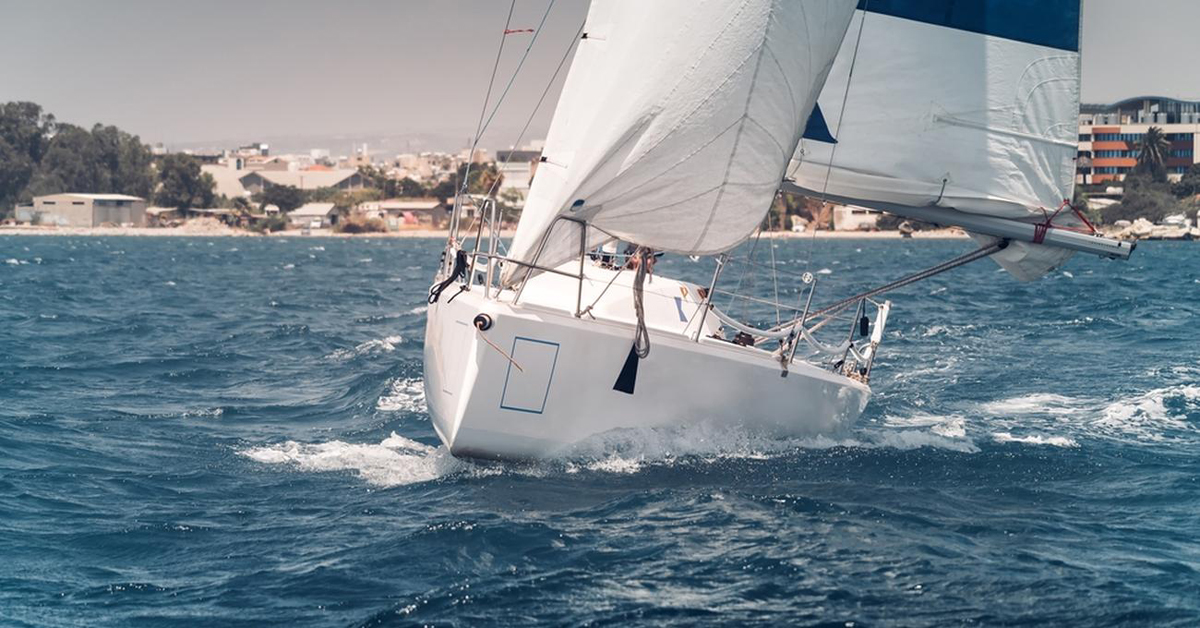
Gusts form in different ways, but offshore they are often created by descending air currents around a cumulonimbus cloud after a cold front. In this case, the wind direction within the gust is usually the same as the wind at higher altitude. In the Northern Hemisphere, this typically means it is veered compared to the surface wind. As a result, if you are sailing on starboard tack, you may get a lift, while on port tack you may experience a header.
However, the situation is slightly more complex, because descending gusts fan out when they hit the sea surface. It is therefore useful to identify your yacht’s position relative to the core of the gust in order to anticipate the wind shift. If you are sailing toward the center of the gust, on either tack, you are likely to experience a header, while sailing away from it will likely give you a lift.
Gusts on close-hauled courses and apparent wind
If you are hit by a gust while sailing close-hauled, the increase in true wind speed will push the apparent wind aft, creating lift that allows you to bear away slightly. Alternatively, if you are on course and do not need to head further upwind, you can ease the sails to increase boat speed and avoid excessive heeling, or combine both actions. If performance is not critical, it is usually easier to bear away slightly, taking advantage of the lift and reducing sail power.
In strong wind conditions, it is advisable to look upwind to spot approaching gusts. This allows you to bear away significantly before the gust arrives, so the sails lift slightly and the boat is not overpowered when the gust hits. You can then head up slowly again, keeping the boat under control and maintaining good speed. When boat speed increases again and the apparent wind shifts forward, you may find yourself sailing a slightly lower course than before.
Conversely, if you are unprepared for the gust, the boat will heel more and you may need to increase rudder angle, slowing down the boat. If you then head up, you will do so against the wind, with lighter wind behind the gust, losing even more speed.

How to respond to a gust when running
When sailing downwind, easing the sails and bearing away slightly, so that the direction of force is more aligned with the course, will produce the greatest increase in speed. Racers steer to keep the boat “full and fast,” reducing heeling to maintain rudder grip at full power. They may even bear away more to stay in the gust, especially in light wind, knowing they will return to the original course with a better apparent wind direction.
For a cruising sailor, the response to a gust when running can be quite different and is more similar to how one reacts when sailing close-hauled. Slightly head up, or well before the gust arrives if it is strong, to reduce sail power, and then bear away when the gust diminishes. As boat speed increases and the apparent wind returns, racers will likely trim the sheets, while cruisers may simply bear away slightly to keep the sails powered.
What changes with running wind
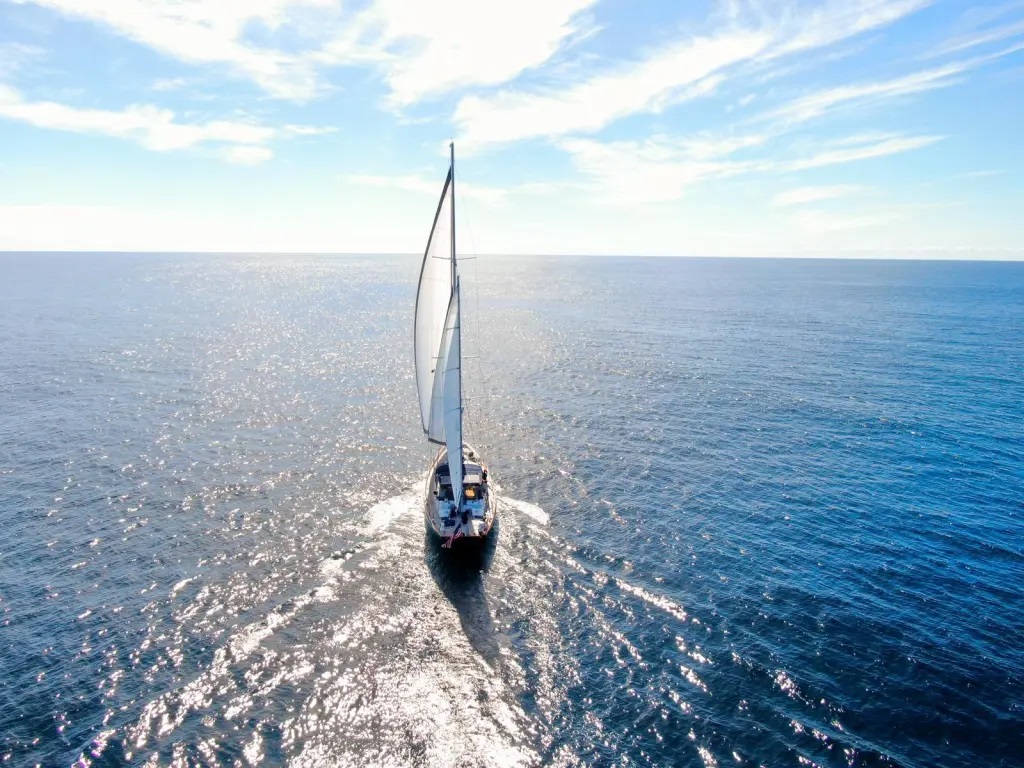
Things change again when sailing downwind in strong wind. With wind directly aft and sails fully deployed, they are pushed but there is no airflow along the sails, so they generate no lift. The force on the sails acts in the same direction as the bow of the boat, so there is no heeling.
Heading up toward the wind, instead of depowering the sails, produces several effects simultaneously: it allows the development of airflow, significantly increasing power; the apparent wind increases since you are no longer running dead downwind; and a strong heeling moment may easily lead to an accidental jibe.
This is compounded by the temptation to hoist more sails downwind when the wind is light, only to find yourself overpowered as soon as you head toward the wind. In general, the recommended response is to keep the bow on the same course, with the primary goal of preventing the bow from burying into the troughs. If you need to reduce power, the quickest technique is to ease the sheet, or alternatively, reduce sail area to adjust the sail plan to the gusts.
What to do if the true wind decreases
When the true wind speed decreases while sailing close-hauled, the apparent wind shifts forward, giving the initial impression of being on a beam reach. The automatic reaction is often to bear away, but this should be done gradually so that the boat does not lose momentum due to large rudder movements and to maintain proper airflow over the sails. When sailing downwind, if the true wind decreases, the apparent wind also shifts forward. In this case, you need to trim the sheets or bear away slightly to keep the sails properly powered.
One of the most common reasons for a sudden decrease in boat speed is the wake from motorboats. The first response is to minimize the effect of the waves by steering appropriately. When the boat slows and the apparent wind moves aft, ease the sails or head up slightly so that the apparent wind angle matches what it was before the wake arrived, keeping the sails correctly trimmed. Then, as boat speed increases again, bear away to return to the original course. In light winds, it may be advantageous to sail slightly higher to increase apparent wind on the sails, gaining speed more quickly before bearing away.
Apparent wind with waves and tide
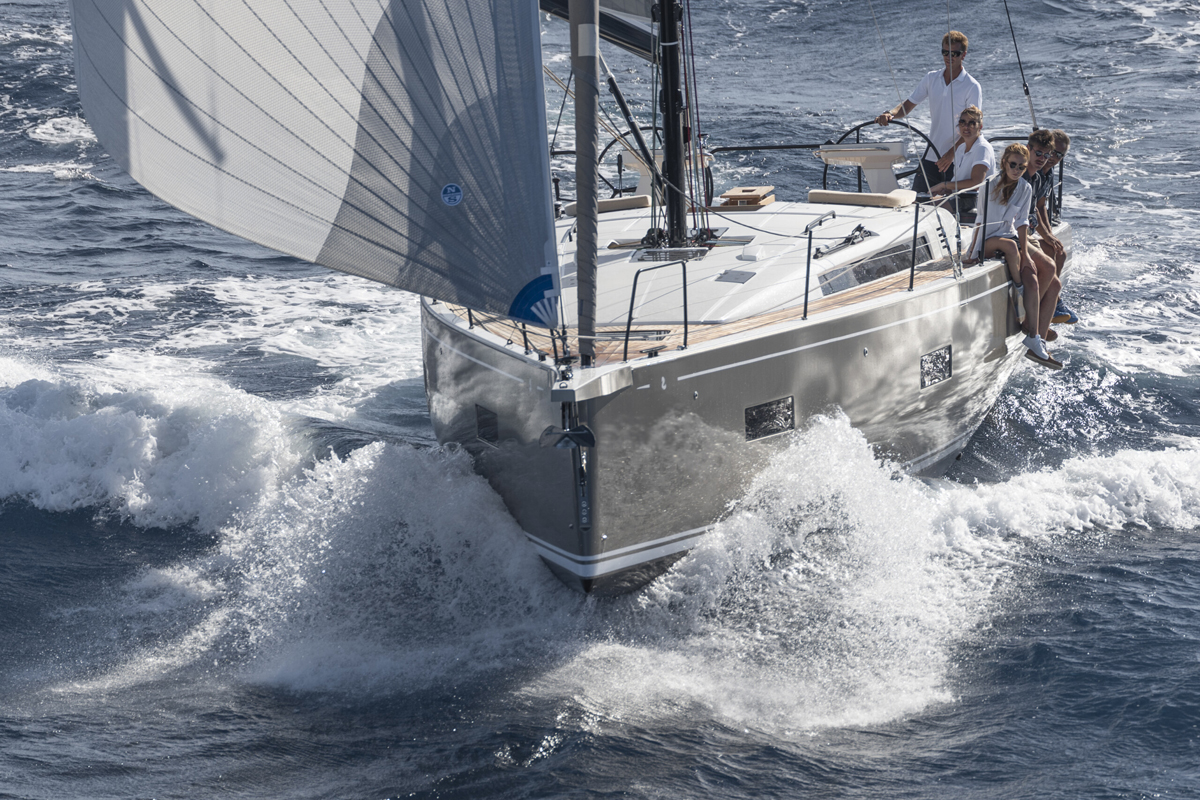
The effect of boat speed on the apparent wind direction is especially noticeable when sailing close-hauled with waves or swell coming from downwind. As the boat climbs the face of a wave, it slows, and the apparent wind shifts aft, allowing the rudder to head up slightly to keep the sails correctly trimmed—helping the boat cut through the wave crest. As the boat descends the other side, it accelerates, and the apparent wind shifts forward, requiring the rudder to bear away to maintain proper sail tension. Apparent wind can also be significantly influenced by tidal currents. Sailing with the tide increases speed over the ground, which in turn increases apparent wind.
In terms of direction, the wind angle shifts forward, requiring either sheet adjustment or slight heading changes. The most noticeable effect is that close-hauled sailing with the tide can drastically increase apparent wind, while downwind sailing may reduce it by one or two points. Things become even more interesting when sailing against the current. With the tide on the leeward side, the boat receives a favorable push toward the wind (“bow-downwind effect”), whereas with the tide on the windward side, both apparent wind speed and progress upwind are reduced.
Today, with tools like GPS and chartplotters, the yacht’s position during a cruise is well known, giving the helmsman and crew greater flexibility to respond to changes in apparent wind. The goal is to anticipate and react to any changes in apparent wind and adjust course and sails accordingly.
Photo credits opening image: North Sails.
Discover the best boat rental deals


You May Also Like

Sailing without an engine: How to get home in case of a breakdown

How to Minimize Engine Use While Cruising on a Sailboat