Regions of Croatia every sailor would love to visit
Surrounded by the Adriatic Sea, one of the calmest and clearest in the Mediterranean, Croatia is an ideal country for sailing. It boasts a total of 6,278 kilometres of coastline and 1,244 islands and islets, with thousands of berths available year-round in modern marinas. Beyond the summer season, the best time to plan a sailing cruise in Croatia is late spring and early autumn. During these months, temperatures are milder, the sea is calm, and the winds are more favourable. Before setting sail, sailors should familiarize themselves with the different winds of the region: the cold, dry Bora from the northeast; the humid southern Jugo; the beloved and constant Mistral; the Burin, also from the northeast but mostly at night; and finally, the sudden and unpredictable Nevera.
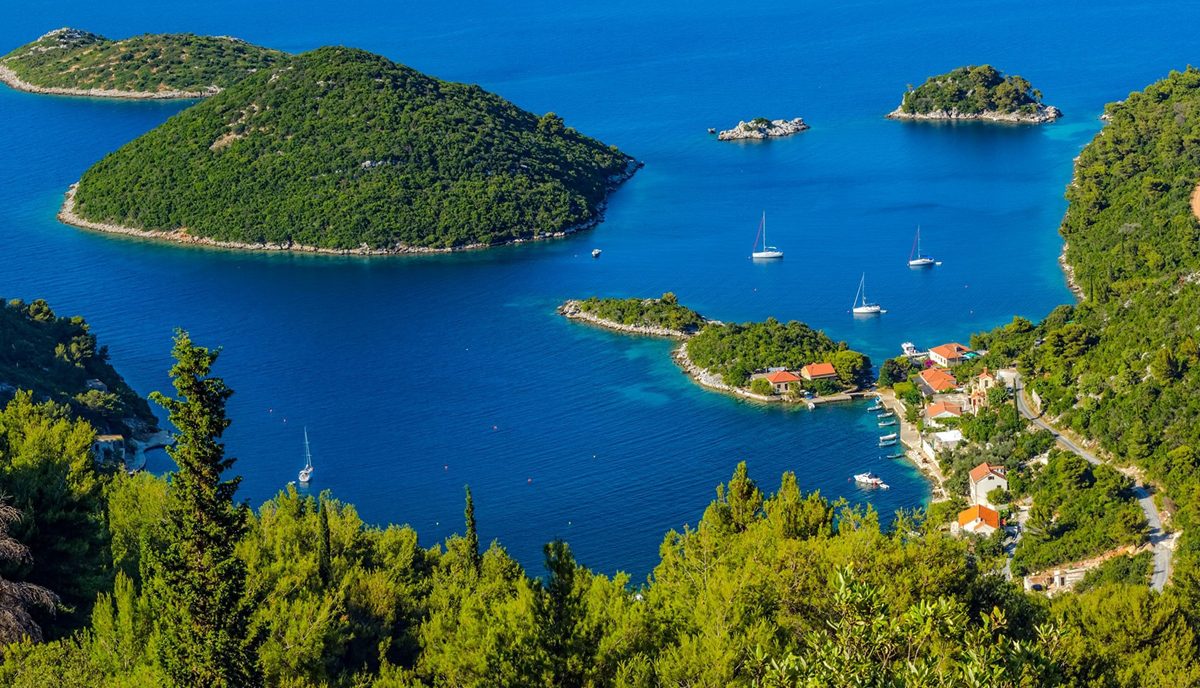
Spread across clear blue waters, the Croatian archipelagos are perfect stops for planning a relaxed route full of surprises. The distances between islands rarely exceed 10 nautical miles. Equally impressive are the Croatian coasts, which from Istria to Dubrovnik offer sailors over 1,500 coves, bays and marinas where it is possible to moor, anchor, and spend the night.
Discover the best boat rental deals in Croatia
Read also: What will happen to nautical tourism now that Croatia has accepted the euro?
In Croatia, sailors feel like “kings”
Famous throughout the Mediterranean, Croatian marinas are located in exceptionally well-protected areas. They can be found near major cities such as Dubrovnik or Mali Lošinj, but also in small bays on islands like Korčula, Hvar, and Vis. In addition to assistance and regular maintenance, they offer visiting sailors extra services, including restaurants and wine cellars where you can enjoy excellent wines and specialties of both local and international cuisine. Those who prefer the charm of small harbors in the heart of coastal towns will find numerous mooring spots all along the Adriatic: from Cavtat and Gruž to Vela Luka, Lošinj, and Istria.
In this article, we will explore which regions of Croatia are most beautiful to discover by sailboat, the natural landscapes they offer, what to visit, and why they should never be missing from any sailing itinerary.
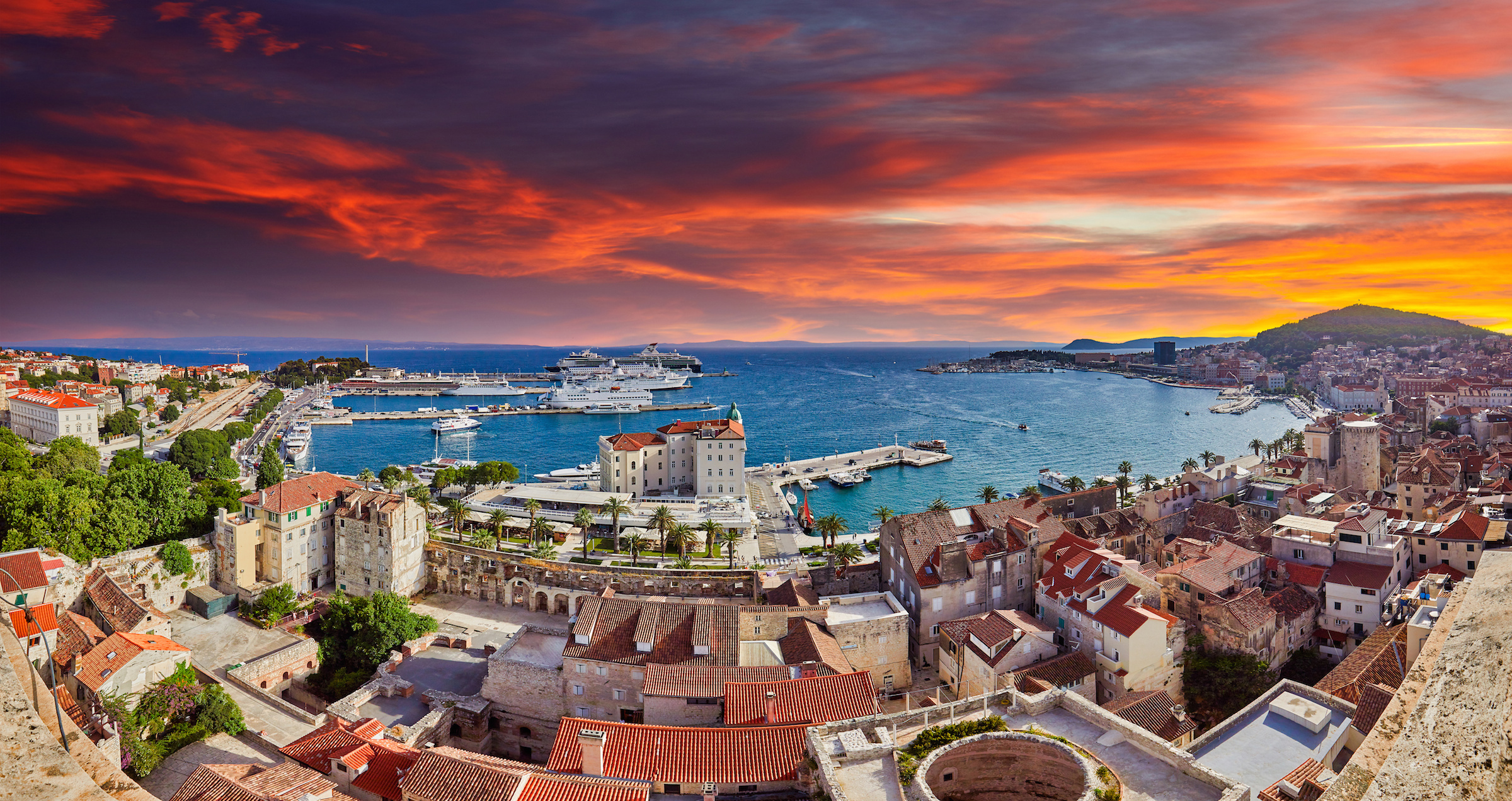
Split, a seafaring city full of events
Split is the heart of the Dalmatia region and the largest city on the Croatian coast. It was built on the ruins of the palace that the Roman emperor Diocletian constructed as his summer residence 1,700 years ago, today known as Diocletian’s Palace. Over time, it has developed into a modern Mediterranean city. In recent years, especially after Croatia’s declaration of independence, Split has transformed from a simple transit stop into a true tourist destination. It offers a perfect blend of beaches and historical monuments, palaces, theaters, cinemas, restaurants, and numerous nightclubs. The pleasant Mediterranean climate allows visitors to fully enjoy the sea for nearly five months a year.
The Croatian regions every sailor wants to visit. As a large and vibrant city, Split hosts events throughout the year. Among the most appreciated by boaters is the Croatia Boat Show, one of the largest boat shows in the world, held in mid-April. There is also the feast of the city’s patron saint, Saint Domnius, celebrated in May. Other major highlights include the Split Summer Festival and the Days of Diocletian, featuring programs and entertainment in ancient Roman style during the second half of August.
The city center, with its ACI Marina Split, lively waterfront promenade, and fish market, lets you experience the true Mediterranean spirit. From Split and Stobreč, it is easy to sail around the island of Brač, visiting Supetar, Milna, and Bol. Nearby you will also find the island of Šolta, with the charming villages of Nečujam and Rogac.
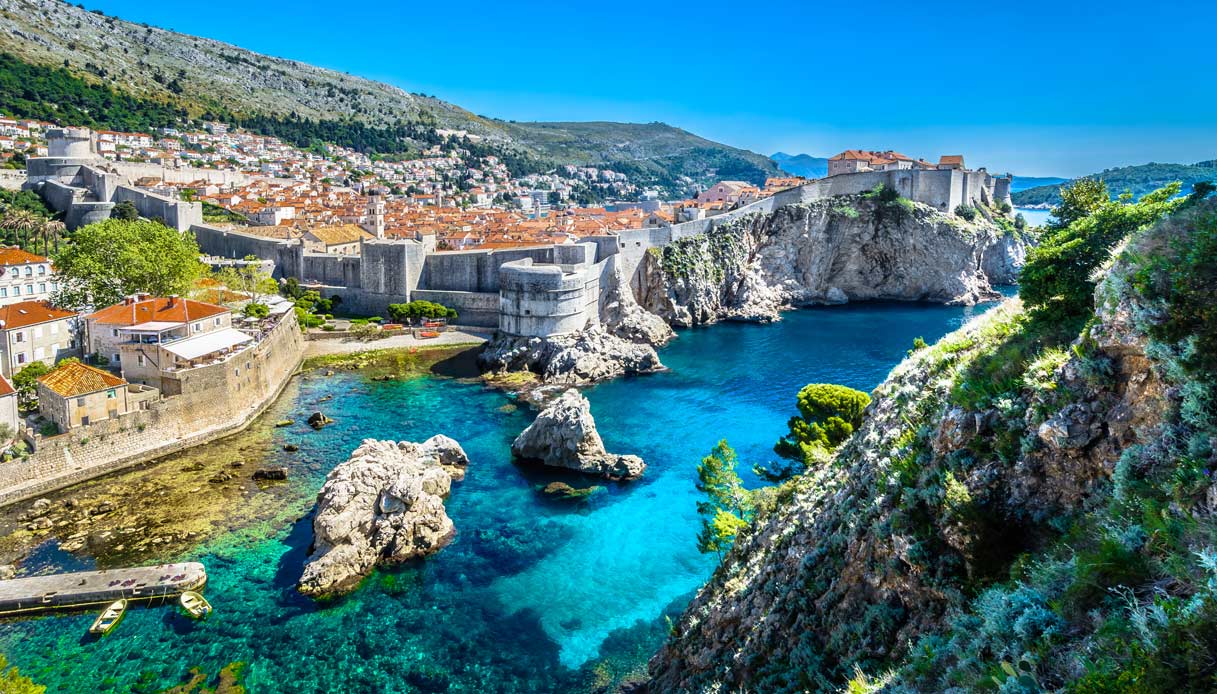
Dubrovnik and its romantic atmosphere
Dubrovnik is one of the most attractive and well-known sailing destinations in the Mediterranean. The city is famous worldwide for its cultural heritage and remarkable beauty. Over 30 years ago, it was listed as a UNESCO World Heritage site. Its numerous churches and sacred buildings, walls, fortresses, and museums captivate every sailor with their exceptional historical value. Dubrovnik also offers numerous pebble beaches, romantic hidden coves, and more secluded bays. The most famous beach is Šunj on Lopud, but Banje Beach, Lapad Bay, and Copacabana are also worth visiting.
Many sailors also enjoy exploring the Elaphiti Islands, as well as Mljet National Park and Lokrum, also called the “island of love.” A walk along its streets, such as the Stradun with its baroque buildings, or a visit to the Gothic-Renaissance Rector’s Palace, shows why Dubrovnik has always been a cultural metropolis.
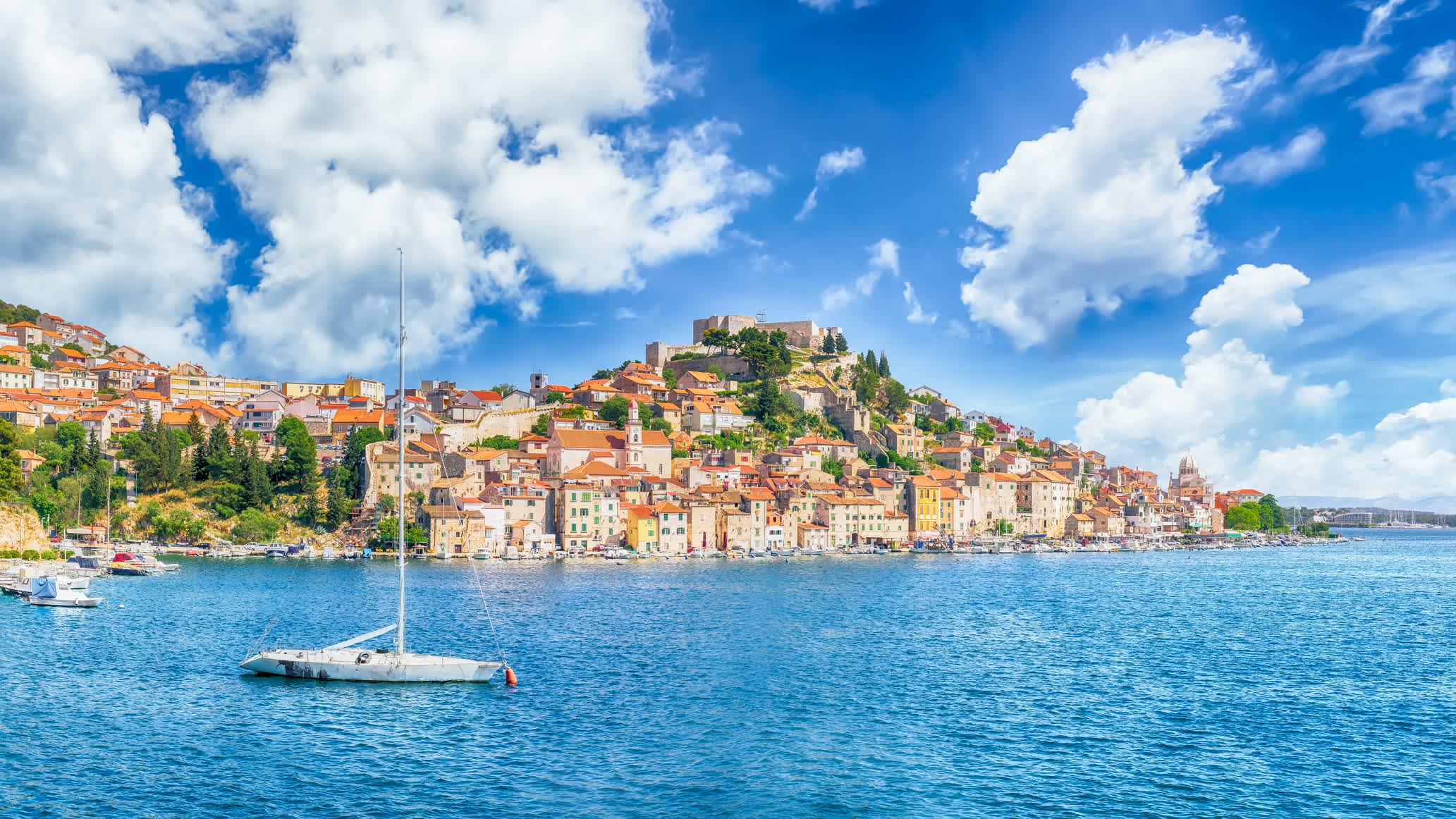
The Šibenik Riviera, a magic of islands and national parks
The Šibenik Riviera is located in central Croatia and stands out for its beautiful landscapes and rich historical-cultural heritage. It is part of the Šibenik-Knin County, stretching along the coast between Split and Zadar for about 100 kilometers, and extending inland to the heart of the Dinara mountains, 45 kilometers from the coast.
The city of Šibenik is situated in a jagged bay through which the Krka River flows, one of Croatia’s most beautiful rivers. The local coast is dotted with 242 islands, islets, and rocks. This area has a low population density, with only 10 villages and small fishing towns to explore. The largest group of islands is the Kornati Islands, famous worldwide for their beauty and designated as a national park since 1980. Even during high season, finding a mooring spot or a quiet bay to anchor is usually easy. The most common winds are the Bora and Scirocco, and along the coast, the refreshing Mistral also blows.
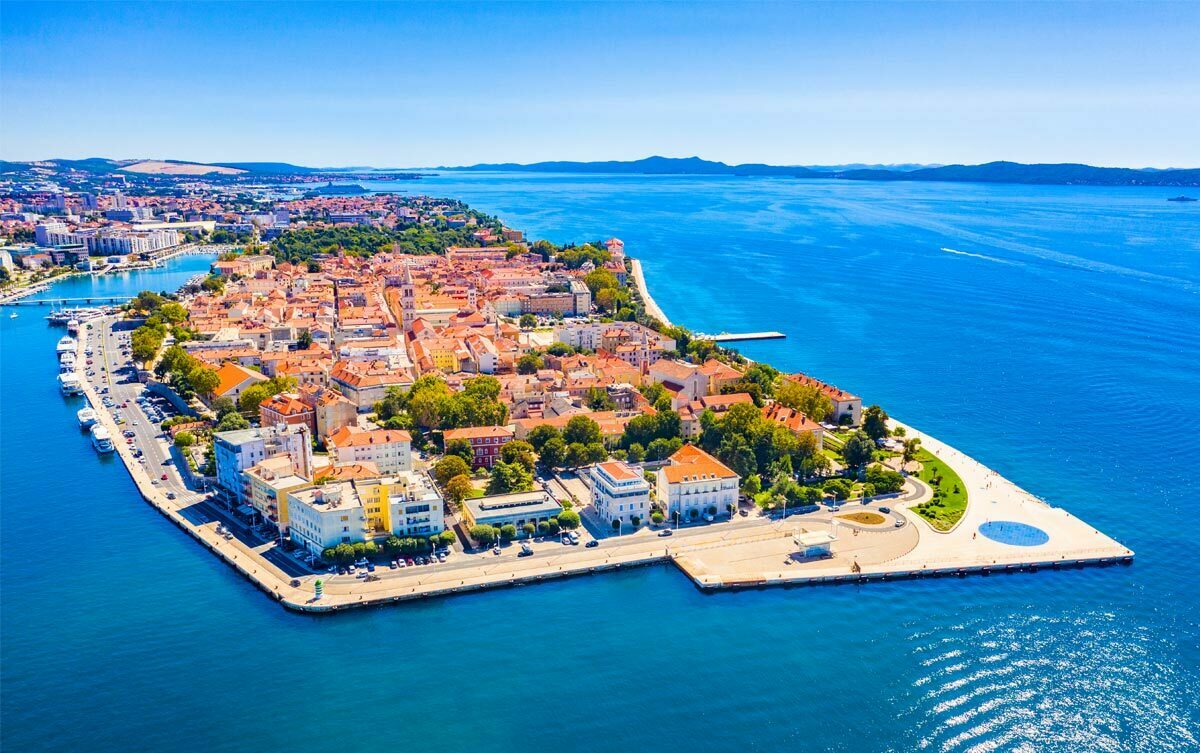
Zadar, a destination that enchants sailors
Zadar is the center of northern Dalmatia, located along the central Croatian coast. With a history spanning 3,000 years, it is highly appreciated by cruisers for its many cultural attractions and rich maritime-style events. The city’s maritime symbol is the famous “Sea Organ,” whose steps along the waterfront function like a musical organ, producing incredible sounds when struck by the waves. During summer, notable events include the “Full Moon Night” at the end of July or early August. On this night, Zadar recreates a historical atmosphere with ancient costumes, ship reenactments, market stalls, and thousands of visitors.
Zadar is also an excellent starting point for sailing trips to the surrounding islands and towns, such as Vir, Ugljan, Pašman, Dugi Otok, the historic town of Nin, and the villages of Sali, Privlaka, Zaton, Petrcane, Sukosan, and Bibinje. Must-visit national parks include Plitvice Lakes National Park, Kornati Islands, and Velebit National Park.
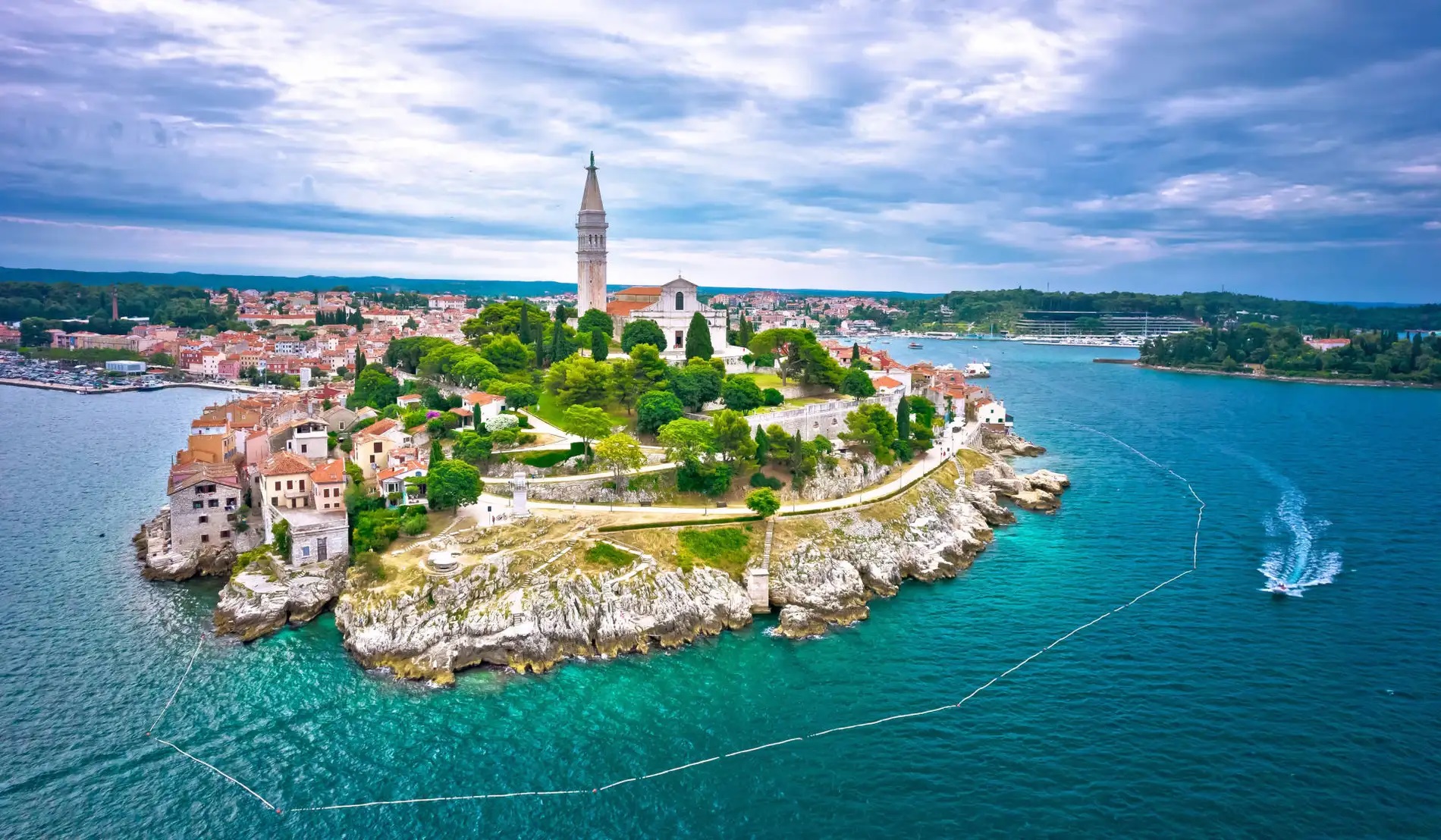
Istria, ideale per una crociera enogastronomica
Istria is the largest green oasis of the northern Adriatic and the biggest Croatian peninsula, surrounded by clear blue waters. It is also the Mediterranean destination closest to most Central European countries. Most of Istria’s beaches are rocky, pebble, or stone, and in some locations, sandy, with lush Mediterranean vegetation reaching the sea—a perfect base for sailing trips in Istria.
Istria is famous for its cuisine, rich in traditional flavors that reflect the peninsula’s history, geography, and climate. Here, visitors can enjoy an authentic atmosphere and taste local dishes paired with regional wines, such as Malvasia (white), Terrano and Refošk (red), or Istrian Moscato (a well-known dessert wine). Olives have been important in Istria since ancient Greek and Roman times, and Istrian olive oils are considered among the best in the world, available for tasting at top local mills and taverns. The Istrian climate is mild and Mediterranean, with warm, dry summers and pleasant, mild winters.
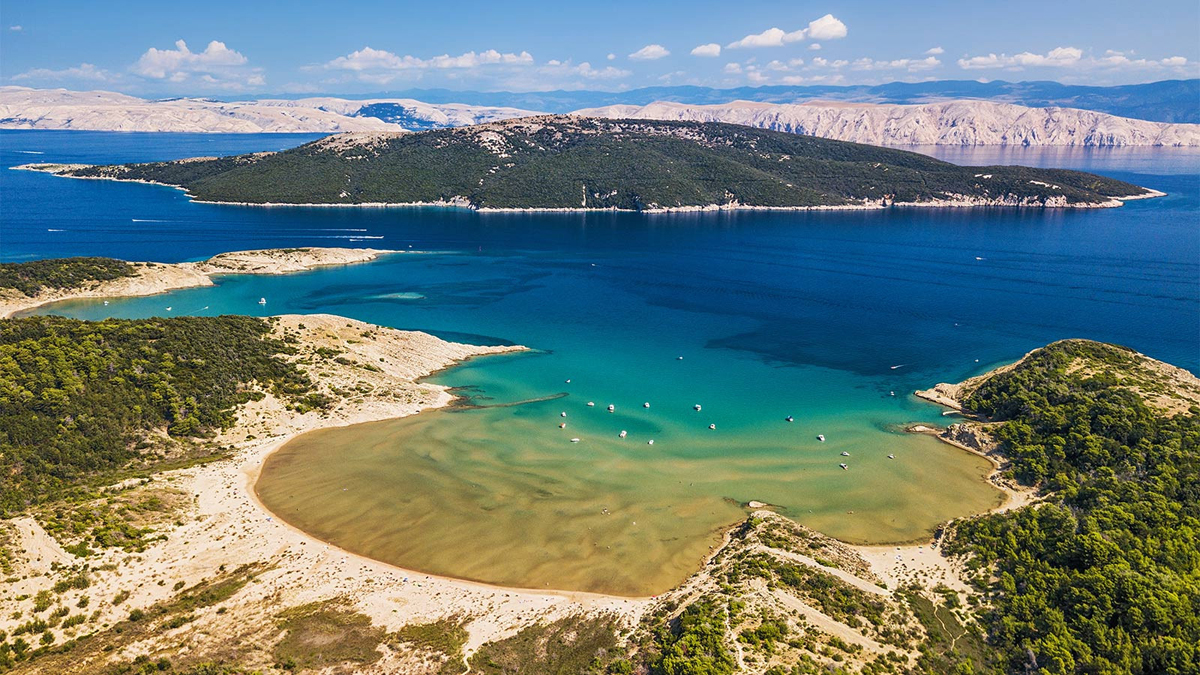
The Kvarner Archipelago, a sailing paradise
Located in the northern Adriatic, well connected to the rest of Croatia and Europe, the Kvarner Archipelago is a highlight of the Croatian coast. Its hub, the city of Opatija, is renowned for its imperial parks and Austro-Hungarian architecture, offering visitors a wide variety of attractions and restaurants serving excellent local cuisine. Opatija is the birthplace of Croatian tourism, and together with other towns in the region, such as Crikvenica, Dramalj, Jadranovo, Novi Vinodolski, and Rijeka, it forms a striking contrast with the nearby islands and mountains. All of this is set against the Adriatic Sea, with its clear, fresh waters, pebble and sandy beaches, picturesque villages, and pristine natural beauty.
Among the most popular sailing destinations are the famous beaches of Baska on Krk, Rajske plaže at Lopar on Rab, Poljana in Mali Lošinj on Lošinj, and Crni molo in Crikvenica. Many other beautiful beaches can be found in Opatija, Novi Vinodolski, Dramalj, the town of Krk on Krk, and on Cres.

You May Also Like
Sailing along the northern coast of Corfu, an island that celebrates life
Ionian Greece, breathtaking islands in a sea ideal for beginners