How convenient is cruising with an autopilot?
A newbie to sailing might rightly ask what is the point of giving control of the boat to an electronic device, namely the automopilot, given that the beauty of going to sea lies in its management. Then one day when the crew has to engaged and help the skipper or when you are tired of spending hours and hours at the helm during a watch and you go below deck to prepare a coffee, while the boat continues undaunted to hold the route under the gusts of wind, then the magic is triggered and that inanimate but intelligent “thing” finds its meaning. The truth is anyone who feels the convenience of an autopilot, not only appreciates it very much, but will hardly be able to do without it.
The name autopilot, or alternatively self-steering system, is an umbrella term that actually encompasses many different types of devices. However, they all share the same basic principle: that an automatic system somehow perceives the boat’s course or wind direction (or both) and decides how to steer under your supervision and with minimal intervention from the skipper. In other words, the autopilot is a kind of invisible crew.
Discover the best boat rental offers

Marine autopilots, a story that starts from afar
Self-government under sail has been around for a long time, although Joshua Slocum is usually credited as one of the first sailors to have used a real, albeit rudimentary, system that controlled the rudder of the boat. As early as 1890, Slocum realized that his “Spray” boat would keep a straight course for thousands of miles when the tiller was blocked. Many experienced sailors argue that it was not just the locked bar, but a combination of sail trim and hull shape that kept the Spray on course. In any case, Slocum’s trick made the first circumnavigation possible with the help of an invisible crew. Such an undertaking has obviously aroused widespread interest in self-government systems. Much of the early development of these systems dates back to the early decades of the 20th century. During this period some autopilots were developed for the regattas of model boats competing in long canals. The first gyroscope-based system was created in the 1920s, but in those days they were only available for large boats. Boaters had to wait until the 1970s, when Derek Fawcett created the first autopilot for small boats.
Electronic autopilots today are a complex mix of sophisticated electronics and complex algorithms that not only provide accurate but also efficient steering of the boat. However, the sophistication of today’s autopilots does not mean that simpler mechanical systems have lost their place on board. Indeed, they are still a key, if not essential, piece of equipment that many boaters swear by. So let’s first see how these systems work.

Electronic autopilot
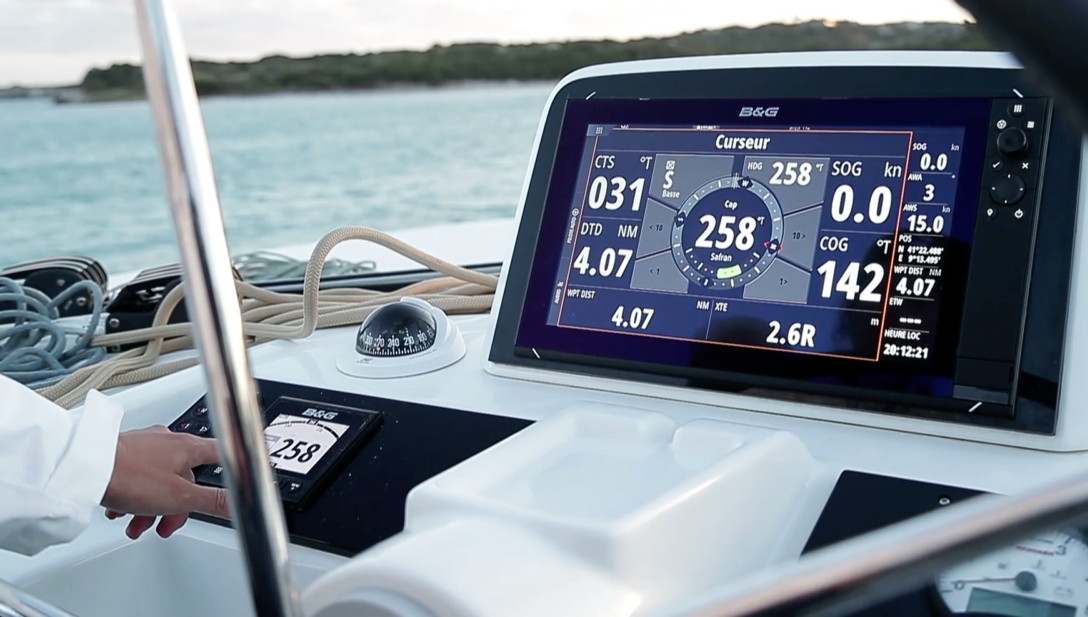
Electronic autopilots are simply small computers that receive information from various sensors, decide how to steer the boat, and then move the rudder. To decide how to steer the boat, autopilots must first acquire some basic data. The most essential information is the boat’s course which the autopilot obtains from an electronic compass. In addition, autopilots use gyros that indicate the rate of change of course or, if desired, the rate of turn. Another sensor, common in some autopilots, measures the actual rudder angle. Electronic autopilots can receive information from various other sources, depending on how sophisticated they are. For example, GPS data allows the autopilot to turn towards a waypoint, while the wind sensor data allows the autopilot to maintain a constant angle to the wind, instead of steering towards the compass. Today, the most advanced systems include sensors such as the 9-axis accelerometer that provide very precise bows even when the boat is subject to heel, tilt and roll, or is cruising at low speed.
Discover the best boat rental offers

The autopilot’s computer and drive unit
The autopilot’s computer is the brain of the system. Its task is to receive and process data from multiple sensors and the skipper’s inputs, and then decide how to steer the boat. Many modern autopilots are connected to chart plotters and can actually pilot the boat. In other words, they can take the user from A to B without much interference from the skipper, and they will also avoid the dangers. In reality, however, if you leave autopilot completely unattended, you can end up in serious trouble. But, as long as you keep an eye on it, it can be extremely useful.
The drive unit is the autopilot’s muscle that is responsible for the actual rudder movement. It usually connects to the rudder directly or via a tiller or wheel. Simply put, the drive unit is just a motor controlled by the autopilot computer. The skippers interact with the autopilot when using a control unit. These units typically have a few buttons that allow the commander to turn the autopilot on and off or change course in one or a few degree increments.

Thirst for energy, the weak point of electronic autopilots
One major flaws of electronic autopilots is power consumption. So, before installing an electronic autopilot, you should carefully consider what your needs are and make sure your batteries are able to cope with the demand. However, it is possible to reduce the power requirement of the autopilot if you understand what other factors affect its power consumption.
The characteristics of the boat, such as the displacement and the shape of the hull, certainly play an important role in the energy demand. However, the main factor leading to a high power requirement is probably the trim of the sails. A well balanced boat will consume far less power on autopilot than a heavily unbalanced one. Sea conditions also have a great influence on the autopilot power requirement. Big waves require a lot of frequent rudder adjustments and therefore a lot of power. Under these conditions, it is best if someone can take the helm and save the autopilot from working for a while.
Discover the best boat rental offers
Mechanical autopilot: advantages and disadvantages
Basically the main concept behind mechanical self-governing systems is the same as their electronic counterparts. They will both steer the boat and to do so they need sensors to determine where to go. However, the similarities end there and there are many important differences instead. Primarily in mechanical systems, sensors are not electronic but simply physical objects such as a weather vane or a sail. Furthermore, they use mechanical equipment to transfer the forces that move the rudder, i.e. they have no electric motors or other electronic components.
The most common type of mechanical self-steering is the windvane (or vane) rudder which itself comes in two types. The first is what we call the “auxiliary rudder” system. In this type of vane, an auxiliary rudder is mounted on the transom and becomes the “real” rudder that steers the boat. When using the auxiliary rudder, the rudder of the boat must be fixed, for example by locking the wheel or tying the bar. The vane has a counterweight that keeps the vane vertical, unless the wind is strong enough to turn it. When the wind is parallel to the vane, the vane remains vertical, in which case the rudder remains aligned with the boat. If the boat changes course, the wind pushes the vane, which then rotates the auxiliary rudder to bring the boat back on its intended course. To function correctly at any sailing point, simply align the vane to the wind. It is also possible to adjust the sensitivity of the rudder response. The auxiliary rudder is actually great, as it can also act as an emergency steering system if a small tiller is attached to it.
Another very common type of windvane rudder is the servo-pendulum. There are many brands of servo pendulum wind blades available, but they all work similarly. Like the direct drive, the servo pendulum also has a small blade in the water that looks like a rudder. But this paddle doesn’t actually steer the boat. The vane in this case moves the blade in the same way as the direct drive gear however the whole blade is free to swing from side to side, like a pendulum. As the blade rotates, a hydrodynamic force causes it to oscillate to both sides, depending on the direction of rotation. A couple of lines then transfer this movement to a wheel or tiller. In short, the main difference between the direct drive system and the servo-pendulum system is that in the latter what ultimately steers the boat is the rudder of the boat, not the auxiliary rudder of the autopilot.

Electronical or mechanical autopilots?
Now that we know a little more about autopilots, let’s get to the main question, which is better: a mechanical or electronic autopilot? The answer is it depends. No system is perfect and each will have its strengths and weaknesses. It can be tempting to think of new electronic systems as a replacement for thee old mechanical systems. However, the reality is that, despite decades of advancements in electronic hardware and software, mechanical systems are still the preferred choice of most boaters who take long cruises and round the world. But that’s not to say that electronic autopilots aren’t good. In fact, most new boats now come with pre-installed electronic autopilots and there are good reasons for that.
The main appeal of a mechanical autopilot is the same as most mechanical systems in general. When they fail, chances are they can be repaired. And when surrounded by thousands of miles of ocean, repairability is very welcome. On long journeys, mechanical autopilots can steer the boat for hundreds of miles, requiring only minor adjustments along the way. Furthermore, they will do so without consuming energy. This is probably their second major advantage over electronic ones.

The sailing style and energy reserves make a final decision
The sturdiness, flexibility and absence of energy consumption make mechanical autopilot particularly attractive for offshore sailing. Also, mechanical autopilots work best in windy conditions, which is the opposite of electronic autopilots, whose motors struggle to stay on course in strong winds. A wind vane is also very quiet compared to the noisy motor of some electronic systems.
Mechanical autopilots do a fantastic job, but they have one major limitation. That is, they rely on the wind to steer the boat and they don’t work when you’re not sailing. If you only have one wind vane on board, you will need to take the rudder when you are powered. This is when electronic autopilots are most useful and why many sailors have both systems on board. This also explains why many new boats are equipped with electronic autopilots. When combined with electronic chart plotters, it will make your coastal navigations much smoother and safer.


Potrebbe anche piacerti

San Vito Lo Capo, paradiso di velisti, free climbers e trekkers

Un frigorifero sempre efficiente è essenziale in crociera